Industrial Bearing Failure Root Cause Analysis: A Reliability Engineer’s Field Guide
A bearing that fails once is a maintenance event. A bearing that fails twice in the same spot is a systems problem. Industrial bearing failure root cause analysis is the discipline that separates those two outcomes. Without it, you’re rebabbitting or replacing into the same operating conditions that destroyed the original bearing, and the timeline to the next failure is already running.
This guide is written for reliability engineers and industrial maintenance professionals who need to move past the failure mode and find the actual cause. The sections below walk through how to read physical evidence on a failed bearing, the most common root causes across heavy industry, and what a defensible RCA report should contain before the bearing ever goes back into service.
Why Root Cause Analysis Matters More Than the Repair Itself
Rebabbitting a bearing is straightforward. Rebabbitting it correctly, then installing it back into a machine that still has the original failure condition, is just an expensive delay. The financial argument for RCA is simple: a quality babbitt repair can run several thousand dollars in labor, materials, and downtime. If the bearing fails again in six months for the same reason, you pay that cost twice. Or three times.
RCA breaks the cycle. It shifts the question from “what failed” to “why did it fail” and, critically, “what has to change before we run this machine again.” That last question is the one that actually protects equipment. The repair is necessary. The RCA is what makes the repair stick.
The Five Most Common Root Causes of Industrial Bearing Failure
Most bearing failures trace back to one of five categories. Knowing which category you’re in early narrows the investigation and prevents chasing irrelevant variables.
- Lubrication failure: starvation, wrong viscosity, contaminated oil, or degraded film. The single most common root cause in sleeve and babbitt bearings.
- Mechanical errors: misalignment, shaft overload, incorrect clearances, or improper installation practices during assembly.
- Contamination and corrosion: particulate ingress, water contamination, or acidic oil breakdown, especially common in steel mills, paper mills, and heavy process environments.
- Electrical damage: stray current or shaft voltage discharging through the bearing surface, which is frequently misread as pitting or erosion from other causes.
- Fatigue: subsurface fatigue cracking from cyclic loading, often visible on the babbitt surface as spalling or delamination after the crack propagates.
These categories aren’t mutually exclusive. A contaminated oil supply can accelerate fatigue. Misalignment increases load, which starves the oil film. RCA often surfaces two or three contributing causes, not just one.
How to Read Physical Evidence on a Failed Bearing
The bearing surface is a record of everything that happened to it in service. The goal is to read that record before cleaning, polishing, or handling erases it. Photograph everything first. Then look for these patterns on the babbitt surface:
- Wiping: smeared, flowed, or displaced babbitt across the loaded zone. Points to oil film collapse from starvation, overloading, or thermal runaway.
- Pitting: small, discrete craters in the babbitt. Can indicate electrical discharge, cavitation, or corrosive attack. The pattern and distribution matter for distinguishing these.
- Fatigue cracking: network cracking, often described as “crocodile skin” or mud-flat cracking, indicates cyclic overload or subsurface fatigue propagating to the surface.
- Erosion: material removal with a directional or flow-following pattern, typical in high-velocity oil environments or where particulate is present.
- Overheating discoloration: babbitt that has oxidized, darkened, or shown heat bluing on the shell indicates sustained high temperature operation.
For a detailed visual reference on these patterns, see the visual guide to babbitt failure modes including pitting, wiping, and fatigue cracks. For fatigue-specific inspection protocols, the bearing fatigue crack inspection process covers what to look for during turnarounds before cracks become catastrophic.
Lubrication Failures: The Root Cause Behind Most Wipes and Seizures
If you had to bet on a single root cause category across all babbitt and sleeve bearing failures, lubrication would win. The oil film in a hydrodynamic bearing is what separates the shaft from the babbitt surface. Anything that collapses that film will wipe or seize the bearing. The variations are worth distinguishing because the corrective action differs significantly.
Starvation occurs when the bearing isn’t receiving adequate oil volume or pressure. The loaded zone starves first. Look for wiping concentrated in the high-load area with sharp boundaries. Low supply pressure, blocked oil passages, failed rings, and improper clearances are common contributors. See the detailed breakdown of low oil pressure root causes in sleeve bearings for a full diagnostic list.
Wrong viscosity produces a thinner-than-designed film. The bearing runs hotter, the clearance effectively increases, and under load the film tears. Check your actual oil grade against the OEM specification and account for operating temperature, not just ambient.
Degraded or contaminated oil is common in high-cycle industrial environments. Oxidized oil loses its film strength. Water contamination reduces viscosity and promotes corrosion. Metal particles from previous wear act as abrasives. If you’re seeing recurring wipes, metal-in-oil analysis can confirm whether babbitt wear was ongoing before the terminal failure event.
Misalignment, Overload, and Installation Errors: Mechanical Root Causes
Mechanical root causes are sometimes harder to find than lubrication failures because the evidence can look similar on the babbitt surface. A bearing wiped by thermal runaway from misalignment looks a lot like one wiped by oil starvation. The location and pattern of the damage are the primary differentiators.
Shaft misalignment (both angular and parallel) creates a non-uniform load distribution across the bearing length. You’ll see preferential wear or wiping on one end of the bearing, or on one side of the crown, rather than centered in the load zone. Coupling misalignment is often the source, but soft-foot in the machine frame produces the same effect.
Improper clearance settings at assembly are a significant contributor to early failures that get misattributed to lubrication. Too tight a clearance generates heat directly. Too loose a clearance creates instability, oil whirl, and fatigue loading. The overheated bearing diagnostic walks through clearance, alignment, and thermal checks together.
Installation errors include incorrect torque on bearing caps, failure to check crush, improper blue-check contact patterns, and inadequate pre-lube before startup. These are worth reviewing with your assembly team as part of the RCA corrective action, not just as a note in the report.
Contamination and Corrosion: When the Operating Environment Is the Problem
In steel mills, paper mills, and heavy process industries, the operating environment itself is often the root cause. Contamination and corrosion don’t always announce themselves. They work on a longer timeline than a catastrophic wipe, which makes them harder to catch before cumulative damage becomes a failure event.
Particulate ingress from process dust, scale, or degraded system components acts as an abrasive against the babbitt and journal surfaces. The resulting wear pattern is typically diffuse rather than concentrated in the load zone.
Water contamination in the oil supply is common near cooling systems, steam equipment, and wash-down environments. Water reduces film strength immediately and promotes corrosive attack on the babbitt and the steel shell over time. Milky oil is the obvious sign; low-level water contamination requires spectrometric analysis to detect.
Acidic oil degradation is an underappreciated corrosion mechanism. Oxidized or thermally degraded oil becomes acidic and attacks the babbitt chemically. If the bearing surface shows generalized pitting without the electrical discharge pattern typical of stray current, acid attack from degraded oil is worth investigating. Regular oil analysis intervals are the most reliable way to catch this before it damages bearings.
Electrical Damage and Stray Current: An Often-Missed Root Cause
Stray current damage is one of the most frequently misdiagnosed root causes in industrial bearing RCA. On the babbitt surface, it presents as pitting or cratering, which looks similar to corrosive attack or cavitation erosion. Without electrical testing, this root cause gets closed as “contamination” or “lubrication failure,” and the next bearing fails the same way.
The mechanism is straightforward. Shaft voltages, induced by variable frequency drives, grounding deficiencies, or electromagnetic imbalance in the machine, discharge through the bearing oil film when the film is thin enough to allow current to pass. Each discharge event melts a small crater in the babbitt surface. Over time, the surface degrades to the point of failure.
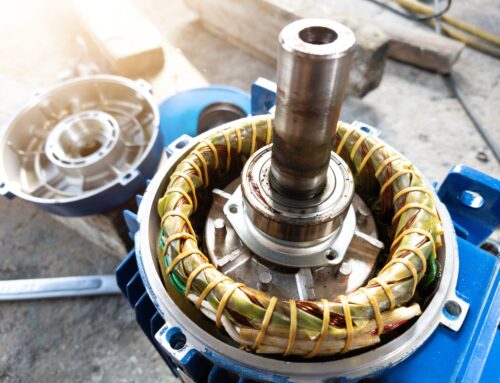
The diagnostic differentiator is the pattern. Electrical pitting tends to be uniform and randomly distributed rather than concentrated in the load zone. Under magnification, the individual craters often show a melted, re-solidified rim. For a detailed treatment of this failure mode in electric motor applications, see the stray voltage and electric motor bearing failure analysis. Correcting this root cause requires electrical remediation, shaft grounding, and in some cases insulated bearing housings. Visual inspection alone won’t get you there.
Documenting Your Findings: What a Proper RCA Report Should Include
A defensible RCA report does two things: it establishes the failure mode and root cause with supporting evidence, and it creates a reference baseline for future failures. If the bearing fails again in two years, you want documentation that tells you whether the root cause was the same or different.
At minimum, a solid RCA report should contain:
- Pre-cleaning photographs of the bearing surface from multiple angles, with annotations marking specific damage zones.
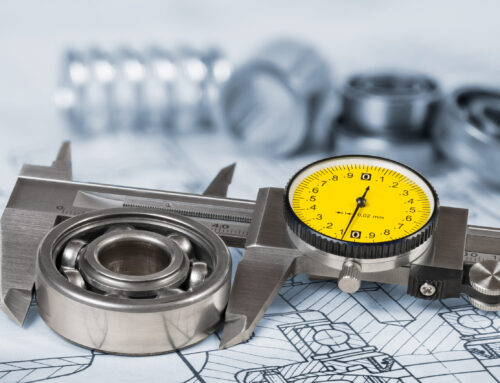
- Dimensional records: bore diameter, clearance measurements, babbitt thickness at multiple points, and any out-of-round conditions found at teardown.
- Oil sample data from the period closest to failure, including viscosity, water content, particulate count, and elemental analysis for wear metals.
- Operating history: load conditions, temperature trends from RTD or thermocouple records, vibration history if monitored, and any recent changes to speed, load, or process conditions.
- Prior repair history: when the bearing was last rebabbitted or replaced, what the previous failure mode was, and whether the same root cause was identified previously.
Shops that document the bearing condition before any metalwork begins, and produce written findings that can feed directly into your internal RCA process, add measurable value beyond the repair itself. Documentation at that level is what allows a reliability engineer to close a corrective action with actual evidence rather than a best guess.
When to Send a Failed Bearing Out for Professional Failure Analysis
Not every failure requires a third-party shop. But several situations make outside analysis worth the time and cost.
Repeated failures at the same position. If this is the second or third failure with similar damage patterns, your in-house RCA hasn’t identified the actual root cause. A fresh set of eyes with no bias toward a particular diagnosis changes that.
Ambiguous failure mode. When the physical evidence could point to two or three different root causes and you don’t have the diagnostic tools to distinguish between them (spectrometric oil analysis, electrical testing, dye-penetrant inspection for subsurface fatigue), professional failure analysis fills that gap.
Insurance, warranty, or OEM documentation requirements. Some failure events require third-party documentation as part of a claim or warranty process. An informal shop report won’t satisfy those requirements; a formal findings document with photographs, dimensional data, and a signed analysis will.
Catastrophic or safety-critical failures. When a bearing failure caused collateral damage to the shaft, housing, or adjacent equipment, or when the machine serves a safety-critical function, the RCA needs to be thorough enough to survive scrutiny.
Fusion Babbitting accepts failed bearings for analysis before any repair or rebabbitting work begins. The physical evidence is documented, photographed, and recorded in a findings report that feeds directly back into your RCA process. If the bearing is repairable, the repair work follows. If it’s not, you still get the analysis. Send your failed bearing with operating history and prior repair records attached, and we’ll tell you what we find.
Frequently Asked Questions
What is the difference between failure mode identification and root cause analysis for bearings?
Failure mode identification describes what happened to the bearing physically: wiping, pitting, fatigue cracking, seizure. Root cause analysis answers why it happened and what operating or maintenance condition produced that failure mode. Identifying that a bearing wiped is failure mode identification. Determining that it wiped because a blocked oil passage caused starvation under load is root cause analysis. You need both, but the failure mode alone doesn’t tell you what to fix before the next bearing goes in.
How long does a professional bearing failure analysis typically take?
Timeline depends on what the analysis requires. Visual inspection with photographic documentation and dimensional recording can often be completed within one to two business days. If the analysis requires oil spectrometry, dye-penetrant or ultrasonic inspection for subsurface fatigue, or electrical testing, the timeline extends to three to five days or longer. For catastrophic failures or insurance-documentation cases requiring a formal written report, allow one to two weeks. When turnaround time is critical, communicate that upfront so the shop can sequence the most time-sensitive elements first.
Can a bearing’s failure mode be identified after it has been cleaned or polished?
Cleaning significantly compromises the analysis. Many failure mode indicators, including oil residue patterns, fine particulate embedded in the babbitt, discoloration gradients, and subtle surface texture differences, are destroyed or obscured by cleaning. Polishing removes even more evidence. If a bearing has been cleaned before analysis, a skilled analyst can often identify gross failure modes (severe wiping, cracking, electrical pitting at sufficient depth) but may not be able to distinguish between closely related causes. Send bearings for analysis in the condition they came out of the machine. Photograph them before any handling changes the surface.
What documentation should accompany a failed bearing sent out for analysis?
Send as much context as you have: the machine type and service conditions, the operating speed and load if known, oil type and last change date, any available oil analysis reports from before the failure, temperature or vibration trends from your monitoring system, the date the bearing was last replaced or rebabbitted, and the failure mode from that prior event if it was documented. Also note whether the failure was gradual (increasing temperature, noise, vibration over time) or sudden. That context shapes the analysis and narrows the list of probable root causes significantly.
Is root cause analysis worth doing on a bearing that only costs a few hundred dollars to replace?
The bearing’s replacement cost is usually not the right number to look at. The relevant number is the total cost of the failure event: downtime, lost production, collateral damage to the shaft or housing, labor to pull and replace the bearing, and expediting costs if the machine is on a critical path. For most industrial equipment, those costs dwarf the bearing’s material cost. If a bearing is failing repeatedly, even a low-cost bearing, the RCA pays for itself the first time it prevents a repeat failure that costs a shift of production.
How do I tell whether a wiped babbitt bearing failed because of lubrication starvation or overloading?
Location and boundary sharpness are the primary differentiators. Starvation wipes tend to start in the highest-load zone and have relatively sharp boundaries between the wiped area and undamaged babbitt, because the film collapsed locally before the rest of the surface was affected. Overload wipes are often broader, more uniform across the loaded arc, and may show evidence of babbitt flow in the direction of shaft rotation. Thermal runaway from either cause can obscure the pattern, which is why pre-cleaning photographs and dimensional records (to establish whether clearance was in spec before failure) matter. Oil pressure and flow records from the period before failure, if available, can confirm starvation. For a closer look at what these patterns look like in practice, see the visual reference on wiped babbitt bearings.
Industrial bearing failure root cause analysis isn’t a paperwork exercise. It’s the step that determines whether the next bearing lasts or fails the same way the last one did. The physical evidence on a failed bearing, if preserved and read correctly, points directly to the operating condition that needs to change. Skip the analysis, and you’re betting the repair on a condition you haven’t confirmed has been corrected.
Fusion Babbitting accepts failed bearings for analysis before any repair work begins. We document the bearing surface, record dimensional data, and produce findings you can use in your own RCA process. If the bearing is rebabbittable, we’ll tell you that too. Send your failed bearing along with whatever operating history and prior repair records you have, and we’ll give you a straight answer on what caused it and what needs to change before it goes back in service.