Why Turnaround Windows Are the Best Time for Bearing Inspection
Planned maintenance turnarounds create the safest and most efficient window to uncover hidden defects in rotating equipment. Among the most serious of these defects are fatigue cracks in bearings. Left undetected, small fractures can spread under load, reduce oil film reliability, and lead to sudden failure. Reliable bearing inspection services during a turnaround reduce risk, guide smart repair decisions, and help your plant restart with confidence.
Fusion Babbitting delivers comprehensive bearing inspection services that focus on catching fatigue damage early. Since 1988, the Milwaukee-based team has supported plants and OEMs with in-shop and on-site solutions tailored to downtime schedules. With 24-hour emergency support, large capacity machining, and certified Babbitt materials, Fusion Babbitting brings speed and precision to every turnaround.
What Causes Fatigue Cracks in Babbitt and Lined Bearings
Fatigue cracks form when a bearing material faces repeated stress cycles beyond its design threshold or beyond the health of its lubrication film. Babbitt-lined bearings, steel-backed shells, and thrust pads are all susceptible under the right conditions. Understanding the root causes helps maintenance teams prevent repeat issues after restart.
- Load cycling and overload events. Startup surges, process upsets, and frequent stop-start cycles increase stress on the bearing surface and the bond between Babbitt and the shell.
- Oil film collapse. Inadequate viscosity, low supply pressure, contamination, or high operating temperatures can thin the lubricating film and allow metal-to-metal contact that initiates cracks.
- Misalignment and shaft runout. Even slight misalignment concentrates stress on a small zone. Over time, this stress creates fine fractures that propagate with each rotation.
- Vibration and resonance. Unbalanced rotors, looseness, or resonance elevate dynamic loading, which encourages crack initiation at the surface or near the bond line.
- Thermal cycling. Frequent or uneven heating and cooling can expand and contract the bearing material and the backing at different rates, which can separate the bond and start cracks.
- Contamination. Hard particles in the oil act like a cutting tool. They create micro-scoring that becomes a starting point for fatigue damage.
- Poor surface finish or improper installation. Rough finishes, improper clearances, or damaged fits create local hotspots that reduce film strength and encourage fatigue.
Fatigue cracks do not always show obvious visual clues. Hairline fractures can hide under staining, sludge, or minor smearing. They can also start at the bond line and remain invisible on the running surface until they break through. That is why expert bearing inspection services and nondestructive testing are essential during a turnaround.
Early Warning Signs Before the Shutdown
Operations and maintenance teams can often detect patterns that suggest fatigue damage well before the planned outage. Watch for these signs and record the data to guide the inspection scope.
- Rising vibration in specific frequency bands that align with bearing or rotor issues.
- Sustained temperature increases at bearing metal temperature probes, even after cleaning coolers or verifying oil flow.
- Oil analysis results that show elevated tin, lead, copper, or aluminum content, which can point to Babbitt wear or backing wear.
- Visible distress on thrust bearings, such as localized discoloration or scoring that repeats after previous repairs.
- Frequent or unexplained trips tied to bearing alarms.
- Noise at startup or shutdown that sounds like scraping, chattering, or intermittent rubs.
Bringing this history to the turnaround team speeds up root cause work. Fusion Babbitting uses trend data and operator notes as part of a complete condition assessment to target the areas with the highest risk of fatigue cracking.
How Professional Bearing Inspection Services Detect Fatigue Cracks
Effective inspections combine surface evaluation, nondestructive tests, and dimensional checks. Fusion Babbitting builds each scope around these steps to find both obvious and hidden fatigue.
Initial Cleaning and Visual Examination
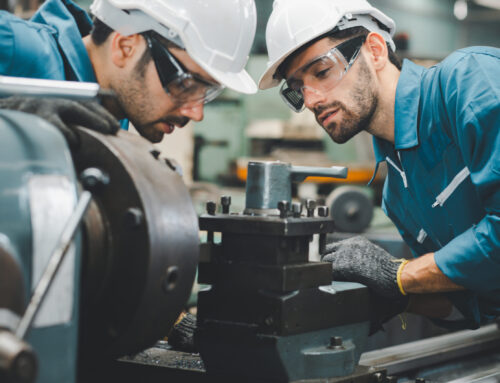
The process starts with thorough degreasing and cleaning. Clean surfaces reveal heat tint, micro scoring, corrosion, and areas of stress concentration. Under good lighting and magnification, inspectors mark suspect zones and check for repeated wear patterns across pads or shells.
Dye Penetrant and Microcrack Detection
Dye penetrant testing is a proven method for identifying fine surface cracks in Babbitt and other nonmagnetic materials. After applying a penetrant and developer, hairline fractures become visible as sharp, contrasted indications. This test is fast, inexpensive, and highly effective at catching early fatigue before it grows.
Ultrasonic and Bond Integrity Checks
Many fatigue cracks begin at or near the bond between the Babbitt lining and the shell. Ultrasonic testing helps detect bond separation, voids, or subsurface cracking that visual tests can miss. Where appropriate, inspectors use ring tests or tap tests as preliminary checks for debonded zones, then confirm with ultrasonic scans.
Eddy Current and Magnetic Particle for Backing Components
Eddy current testing can pinpoint small surface flaws in conductive components, such as steel-backed shells, where surface-breaking cracks may develop. Magnetic particle testing can be used on ferrous components that are not Babbitt lined. Inspectors select the method that matches the material, geometry, and expected defect type.
Dimensional Checks and Contact Pattern Evaluation
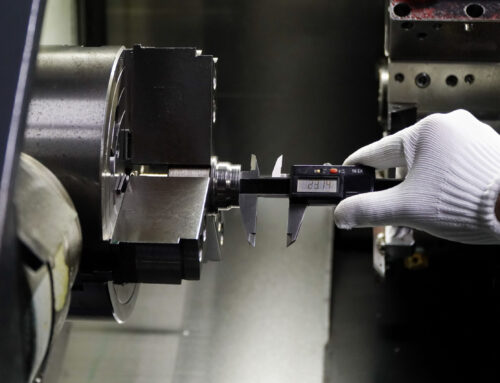
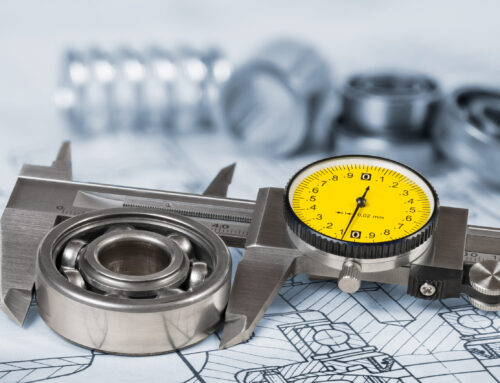
Measurement is as important as flaw detection. Improper clearances, out-of-round housings, and poor surface geometry create stress that drives fatigue. Fusion Babbitting measures bore size, roundness, taper, and alignment features to confirm the bearing will support a healthy oil film. Blue-fit checks show contact patterns, which can reveal misalignment and uneven load zones linked to cracking.
Surface Hardness and Metallurgical Review
Localized hardening, softening, or inclusions can weaken the Babbitt layer and speed up crack growth. Hardness checks and metallurgical review of removed samples can uncover material issues or improper previous repairs. Fusion Babbitting uses certified Babbitt alloys and process control to ensure consistent bond strength and material performance in repairs.
Fusion Babbitting’s Turnaround Inspection and Repair Process
Fusion Babbitting aligns its workflows with your outage plan so that inspection, repair, and reporting move quickly. The goal is to detect fatigue cracks early, deliver clear repair options, and return components on time.
- Project intake. The team reviews operating data, drawings, and past repair history, then sets an inspection plan and reporting timeline.
- Disassembly and documentation. Each component is photographed and logged. Serial numbers, fits, and orientation notes are captured for precise reassembly.
- Cleaning and initial inspection. Surfaces are cleaned and examined under magnification. Suspect areas are marked for NDT.
- NDT sequence. Dye penetrant, ultrasonic, eddy current, and other methods are used as needed to uncover surface and subsurface cracks.
- Dimensional verification. Critical dimensions, clearances, and geometry are checked against OEM specs. Deviations are recorded.
- Root cause assessment. Findings are linked to likely causes, such as misalignment, lubrication issues, or process shocks. Recommendations address both the symptom and the source.
- Repair plan. Options can include localized repair, arc flame spray restoration, rebabbitting by centrifugal casting, or full rebuild. The plan is matched to turnaround time and budget.
- Centrifugal casting and rebabbitting. Fusion Babbitting uses certified Babbitt materials and controlled centrifugal casting to achieve a strong bond and uniform lining thickness.
- Arc flame spray application. Worn steel or non-critical surfaces are restored, then machined back to specification to avoid the cost of replacement.
- Precision machining. Bores, thrust faces, and fits are machined to meet or exceed OEM requirements. Fusion Babbitting handles components up to 120 inches in diameter and length.
- Quality checks. Final inspection confirms geometry, surface finish, and clearances. NDT may be repeated on critical areas after repair.
- Reporting and handoff. You receive a clear report with photos, measurements, test results, and recommendations for startup and monitoring.
When a spare is not available or a bearing is obsolete, Fusion Babbitting can reverse engineer the component and produce an accurate replica. The team creates detailed drawings and delivers a new part that matches fit and performance requirements for a fast return to service.
Repair or Replace: Making the Right Call
Fatigue cracks vary in severity. Not every indication requires full replacement. The best decision balances safety, cost, and schedule.
- Shallow surface cracks isolated to the running surface. Often suitable for localized repair or rebabbitting if the bond and backing are sound.
- Cracks near the bond or through the Babbitt layer. Usually require removal of the old lining and complete rebabbitting by centrifugal casting.
- Extensive cracking across multiple zones or evidence of debonding. Strongly indicates full strip and reline, plus a review of alignment and lubrication.
- Backing or shell cracks. Typically require shell replacement or a new manufactured part to maintain structural integrity.
- Time critical projects. Reverse engineering and new manufacturing are viable when turnaround windows are tight and spares are unavailable.
Fusion Babbitting advises on both the technical and scheduling impacts, then completes the chosen path to meet your startup deadline.
Preventing Fatigue After Restart
Repairing a cracked bearing is only part of the solution. Preventing recurrence protects your maintenance budget and uptime.
- Verify alignment and concentricity. Check shafts, housings, and pedestals. Correct even small alignment errors that concentrate load.
- Balance rotors. Reduce vibration levels that contribute to cyclic fatigue.
- Upgrade lubrication practices. Confirm oil grade, temperature, and supply pressure. Improve filtration, replace aged oil, and address water or particle ingress.
- Inspect seals and housings. Better sealing keeps contaminants out and improves oil film health.
- Monitor after restart. Trend vibration, temperature, and oil analysis closely for the first weeks after commissioning.
- Train operators on soft starts and controlled process ramp-ups. Reducing load shocks significantly lowers fatigue risk.
- Document and standardize. Use clear startup and shutdown procedures to maintain consistent conditions.
Fusion Babbitting includes practical recommendations with each inspection report. The team can also support your reliability program with scheduled bearing inspection services that align with future outages.
Industries and Applications That Benefit
Fatigue cracking is a cross-industry risk, especially where heavy loads, high speeds, or dirty environments are present. Fusion Babbitting supports customers across the United States in industries where reliable bearings are mission critical.
- Aluminum mills, paper mills, and steel mills that run large rolls and drives under heavy load.
- Cement and chemical plants with harsh environments that challenge lubrication cleanliness.
- Fossil and nuclear plants where reliability and compliance are essential.
- Hydro and pump storage facilities with thrust and guide bearings that see long duty cycles.
- Marine repair, shipyards, and motor repair shops that demand quick turnaround and precise fits.
- Mines and crushed stone producers with high-shock loading and abrasive dust exposure.
Common applications include electric motors, hydro power systems, pumps, and turbines. Fusion Babbitting’s bearing inspection services cover each of these assets with tailored scopes and proven repair methods.
Why Choose Fusion Babbitting for Bearing Inspection Services
- Established expertise. Fusion Babbitting Co., Inc. has been serving industry since 1988 with over 40 years of combined bearing expertise on staff.
- Full scope capability. Repair, rebabbitting, rebuilding, reverse engineering, and new manufacturing, all supported by general fabrication and machining.
- Quality that meets or exceeds OEM specifications. Certified Babbitt materials and strict process control ensure strong bond strength and consistent performance.
- Capacity for large components. Machining and fabrication up to 120 inches in diameter and length.
- Fast, clear reporting. Detailed findings, photos, and recommendations delivered on your turnaround schedule.
- Emergency response. 24-hour service and nationwide support reduce downtime when the unexpected happens.
- Centrifugal casting and arc flame spray. Advanced processes restore both performance and fit to original requirements.
- Reverse engineering for obsolete bearings. Accurate replicas with detailed drawings keep legacy equipment running.
Fusion Babbitting blends craftsmanship with advanced inspection tools. The result is a dependable partner who finds the root cause, fixes it right, and helps prevent it from coming back.
FAQs About Turnaround Bearing Inspections
How long does a typical inspection take during a turnaround?
Scope and part size determine duration. A straightforward inspection with dye penetrant, ultrasonic checks, and basic measurements can often be completed within a day. If repairs are needed, Fusion Babbitting works with your schedule to prioritize critical components and stage work to meet restart dates.
Can you repair cracks on-site, or do components need to go to the shop?
Initial inspection and some minor procedures can be completed on-site. Most crack repairs, rebabbitting, and precision machining require shop capabilities to ensure quality and accuracy. Fusion Babbitting coordinates fast logistics for safe transport and return.
What if drawings or OEM specs are missing?
Reverse engineering fills the gap. The team measures the original component, documents critical features, and creates detailed drawings. This allows accurate repair, rebuild, or manufacture of a new part when OEM data is not available.
How often should we schedule bearing inspection services?
Match inspection frequency to risk and duty cycle. Critical assets running 24/7 may require checks every outage, along with periodic vibration and oil analysis. Less critical assets may be fine with inspections tied to major turnarounds. Fusion Babbitting can help define a risk-based schedule.
What results should we expect from a quality inspection report?
You should receive photos of findings, notes on crack locations and types, dimensional data, NDT results, a clear root cause hypothesis, and repair recommendations. Good reports also include startup guidance and maintenance tips to prevent repeat failures.
Schedule Bearing Inspection Services With Fusion Babbitting
Do not let small fatigue cracks turn into big failures. Plan bearing inspection services into your next turnaround and restart with confidence. Fusion Babbitting brings the experience, equipment, and speed you need to catch damage early and resolve it before it becomes a costly problem.
Contact Fusion Babbitting Co., Inc. to schedule your assessment or request emergency support:
Address: 4540 W. Burnham St., Milwaukee, WI 53219
Phone: 414.645.5800 | Toll-Free: 800.613.5118
Email: sales@fusionbabbitting.com
From repair, rebabbitting, and rebuilding to reverse engineering and new manufacturing, Fusion Babbitting delivers high-quality work that meets or exceeds OEM specifications. The team serves clients nationwide and stands ready to help your operation run efficiently and reliably.
Plan ahead, inspect thoroughly, and trust a proven partner. With Fusion Babbitting’s bearing inspection services in your turnaround plan, you can reduce risk, cut downtime, and protect the life of your critical equipment.