Bearing journal repair tolerances explained so you know the exact specs your vendor must meet to protect reliability and uptime. Read this practical guide, see the tolerances that matter, and use the checklist at the end to evaluate your vendor. Fusion Babbitting is here to help with fast, precise bearing journal and Babbitt bearing repairs.
Why Bearing Journal Tolerances Matter
A bearing journal is the smooth, precision-machined portion of a shaft that runs inside a bearing. When the journal is correct, a stable film of oil separates metal surfaces, friction drops, and heat stays under control. When it is wrong by even a few ten-thousandths of an inch, the hydrodynamic film breaks down. That causes metal contact, vibration, and rapid wear. For critical equipment in mills, plants, power stations, and shipyards, that difference can decide whether you run for years or fail after a few weeks.
Proper bearing journal repair tolerances are not just about hitting a number on diameter. Vendors must control roundness, taper, surface finish, concentricity, alignment to other features, and the condition of oil feed and relief geometry. These details protect the oil film, reduce heat, and keep your machine in its designed operating window. The right tolerances also make installation easier and prevent premature failures from poor fit, misalignment, and material defects.
What Is a Bearing Journal
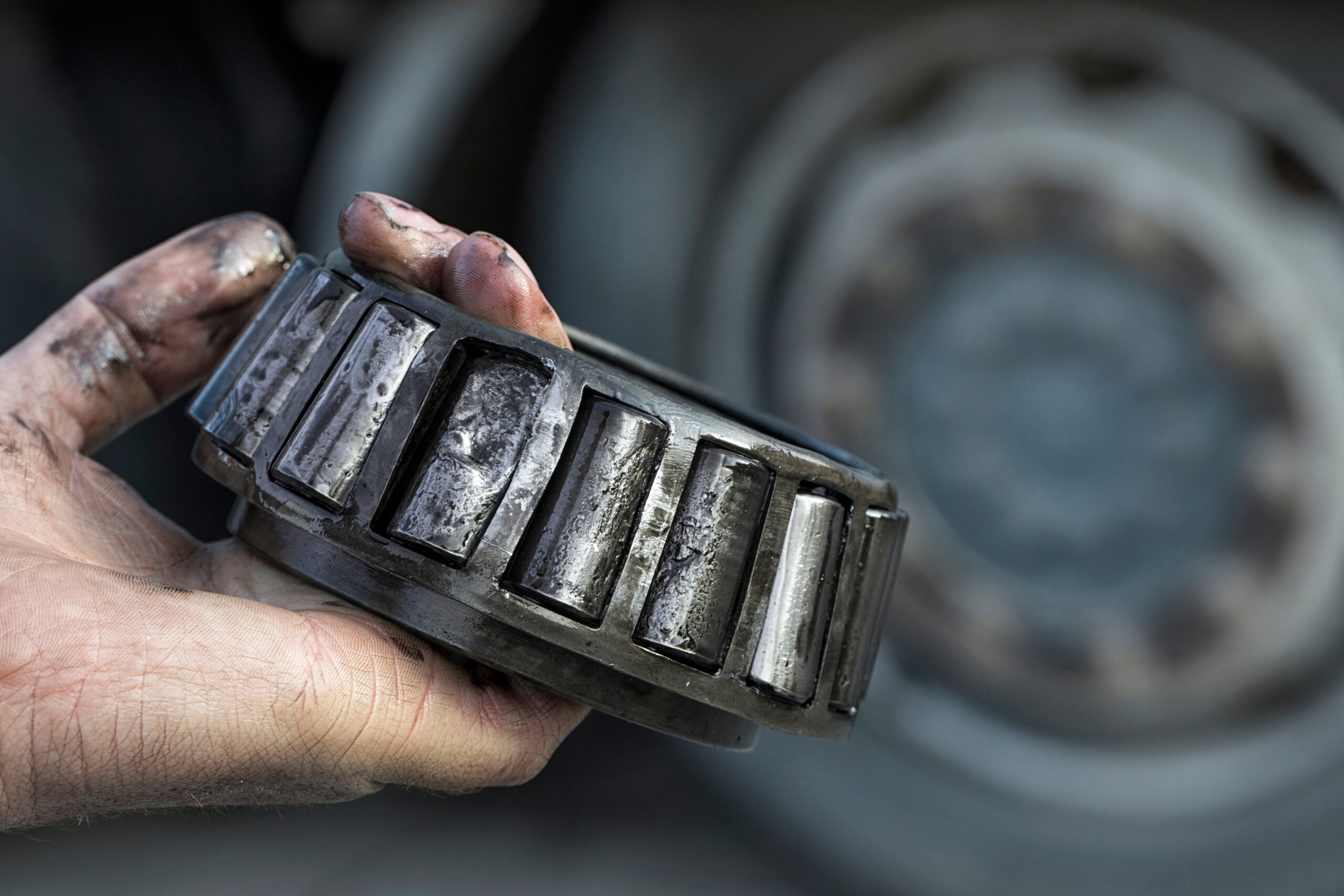
The bearing journal is the section of a rotating shaft that supports load inside a plain bearing or sleeve. In hydrodynamic systems, the journal rides on an oil film created by rotation and wedge-shaped clearances. Materials can include hardened steel, stainless, or a buildup layer like thermal spray. Journals face wear from contamination, misalignment, inadequate lubrication, and start-stop cycles. Common damage includes scoring, fretting, pitting, taper, and out-of-round conditions. A quality repair restores the intended geometry and surface texture so the oil film can form quickly at startup and remain stable under load.
Repair Pathways Vendors Use
Regrind and Polish
For light wear, the vendor may regrind the bearing journal and polish to the target surface finish while maintaining concentricity to the datum centers. This is only viable if the finished dimension can still maintain the designed bearing clearance or if the bearing shell will be resized accordingly.
Arc Flame Spray Build-Up and Machining
For shafts that are undersized or scored, arc flame spray build-up restores the journal diameter. The vendor sprays a compatible material, then machines and polishes the journal back to specification. Fusion Babbitting uses arc flame spray to rebuild worn components and then machines them back to the original specification. This method is reliable when the vendor controls bond quality, heat input, and post-machining geometry.
Sleeving
In some cases, the journal can be sleeved. A precision sleeve is installed with a controlled interference fit, then finish-machined to the required tolerance. The vendor must manage interference, sleeve length, fillet blends, and concentricity. Not all applications allow sleeving, so confirm with the OEM or engineering authority.
Complete Shaft Replacement or Reverse Engineering
If damage is severe or the shaft has multiple critical features beyond repair, a new shaft may be manufactured. Fusion Babbitting offers reverse engineering with detailed drawings to replicate obsolete or undocumented parts when needed.
Rebabbitting the Bearing Side
Not all problems come from the shaft. If the Babbitt bearing surface is worn, scored, or cracked, rebabbitting and line boring may be required. Fusion Babbitting performs centrifugal casting with certified Babbitt materials and then machines the bearing to match the journal clearance specification. Often the best long-term solution is to correct both components together so they match as a set.
Critical Tolerances Your Vendor Should Meet
Every machine has its own design targets, so your vendor should verify repair tolerances against OEM or engineering requirements. The values below represent common goals for hydrodynamic journal applications that protect film formation and extend life. Ask for documented measurement data with your finished parts.
Diameter and Operating Clearance
The repaired bearing journal diameter must deliver the intended running clearance in the bearing. A common range for hydrodynamic journal bearings is 0.001 to 0.0015 inch of radial clearance per inch of journal diameter for steady loads. Heavy loads or slow speeds may need more clearance, while high speed may use less. Vendor reports should state the final journal diameter and the target bearing ID so you can confirm the resulting clearance at operating temperature.
Roundness and Lobing
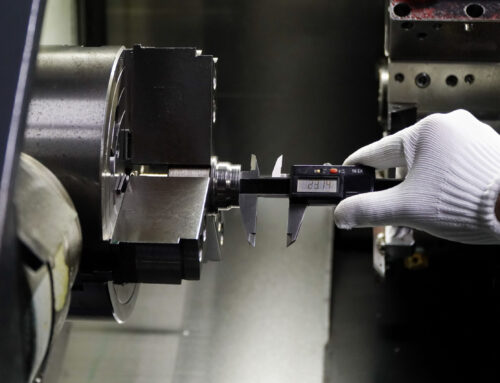
Roundness error can break the oil film and create hot spots. A best practice target is to keep total roundness and lobing well below the total clearance. For many industrial journals, keeping roundness within 0.0003 inch or better is a practical goal. Your vendor should measure roundness with an appropriate instrument rather than relying only on micrometers.
Taper and Barrel Shape
Excess taper creates uneven load distribution in the bearing and poor film development. In general, keep taper and barrel shape within a few ten-thousandths across the journal length. A common target is less than 0.0005 inch over the full length of the bearing journal. The vendor should measure diameter at multiple stations along the axis and provide a plot or table.
Surface Finish and Lay
Surface texture affects lubrication. Too rough and the surface abrades the bearing. Too smooth and the film can struggle to build at startup. Typical targets for steel bearing journals are 8 to 16 microinch Ra with a controlled lay parallel to the axis. Avoid cross-hatch patterns on journal surfaces. For Babbitt bearing bores, 32 to 64 microinch Ra is commonly used, with careful attention to oil relief and edge breaks.
Concentricity and Runout to Datums
The bearing journal should be concentric to critical features like coupling seats, gear seats, or rotor fits. Your vendor should establish datums between centers or using referenced fits and then hold total indicated runout within the OEM tolerance, often in the 0.0005 to 0.002 inch range depending on size and speed. If a sleeve is installed, the sleeve ID must be coaxial with the shaft centerline and maintain the fit tolerance.
Fillets, Undercuts, and Edge Breaks
Stress risers at the ends of the bearing journal can lead to cracking. The vendor should maintain specified fillet radii or undercuts, blend transitions smoothly, and apply small, consistent edge breaks. Sharp corners and raised burrs should not be present.
Oil Grooves, Reliefs, and Holes
Lubrication features must be clean, deburred, and sized correctly. Oil holes should have a proper lead-in and be free of smear. Reliefs must match the design depth and width so they do not starve the bearing or reduce load capacity. Any groove should be aligned to the print and not cut the journal below tolerance.
Hardness and Coating Integrity
If the bearing journal is repaired with arc flame spray or a sleeve, the vendor should verify coating or sleeve integrity. Hardness should meet specification for wear performance. Bond quality can be checked using ultrasonic testing or pull tests when appropriate. Coating porosity, cracks, and delamination are not acceptable.
Thermal Growth and Operating Conditions
Clearance at room temperature is not the same as clearance at operating temperature. The vendor should consider thermal expansion of the shaft and bearing housing, oil temperature, and load. If necessary, the repair plan should include a target cold clearance that delivers the correct hot clearance in service.
Straightness and Bending
Straightness affects how the journal loads in the bearing. Check total runout between centers across the shaft span and correct as needed. Any straightening should be controlled to avoid inducing residual stress that can move the journal after machining.
Balance for Rotating Assemblies
For rotors and high speed shafts, dynamic balance standards should be stated and achieved after journal repair. If material is added or removed, the vendor should recheck balance at the specified grade.
Inspection and Documentation Standards Vendors Should Follow
Metrology Tools and Controlled Environment
Measurements should be made in a temperature-controlled space around 68 F to reduce thermal error. Tools should be calibrated and traceable. Expect to see micrometers, bore gages, dial bore indicators, air gages for small clearances, roundness testers, and surface profilometers. If a CMM is used for datums and concentricity, the setup should be documented.
Non-Destructive Testing
NDT finds defects that geometry checks cannot. Dye penetrant is useful for finding cracks on steel journals after grinding or spraying. Magnetic particle can detect surface cracks on ferrous shafts. Ultrasonic testing can evaluate bond integrity on thermal spray repairs. The vendor should record NDT results and note any corrective actions.
Material Certifications and Process Control
Ask for certifications on Babbitt and spray materials. For Babbitt bearings, ASTM B23 grades are common and should be declared. For arc flame spray wire or powder, the vendor should provide lot traceability and specify the process parameters used. Centrifugal casting parameters, preheat, and cooling controls should be noted when bearings are rebabbitted.
Final Reports and As-Left Data
At delivery, you should receive a dimension report with before and after measurements, surface finish data, roundness, and runout. Photos of critical features, serial numbers, and date codes are helpful for your records. If balancing was performed, include the balance report and the speed used during verification.
Red Flags During a Bearing Journal Repair
- No written inspection plan or final report
- Vendor relies only on hand micrometers for roundness or surface finish
- Room temperature and tool calibration are not controlled
- Surface finish is mirror-like without measured Ra values
- No NDT on sprayed or sleeved journals
- Edges are sharp, burrs are present, or oil features are smeared
- Vendor cannot state the final clearance target and how it was achieved
- Inconsistent stories about material type or bond strength
- Delivery is fast but documentation is thin or missing
Tolerances and Process Checklist You Can Use
- Confirm OEM or engineering specifications for diameter, clearance, and finish.
- Define datums. Establish how concentricity and runout are referenced.
- Choose a repair path: regrind, arc flame spray build-up, sleeve, or replacement.
- Require an inspection plan: incoming checks, in-process holds, final report.
- Diameter target set to achieve correct cold and hot clearance.
- Roundness and lobing target set below a fraction of total clearance.
- Taper control across the bearing length with measurements at multiple stations.
- Surface finish goals: journal 8 to 16 microinch Ra, bearing bore 32 to 64 microinch Ra as required.
- Fillet radii, edge breaks, and undercuts defined and verified.
- Oil features cleaned, deburred, sized, and aligned to print.
- NDT method selected: dye penetrant, mag particle, or ultrasonic as applicable.
- Material certifications: Babbitt grade, spray wire or powder spec, batch records.
- Environmental control: measurement temperature, tool calibration, gauge R and R if needed.
- Balancing requirements set, if part of a rotating assembly.
- Final report delivered with measurements, finish data, NDT results, photos, and any rework notes.
How Fusion Babbitting Meets These Standards
Fusion Babbitting Co., Inc. has served industrial clients since 1988 from its Milwaukee, Wisconsin facility at 4540 W. Burnham St. The team specializes in Babbitt bearing services and bearing journal repairs that meet or exceed OEM specifications. Fusion Babbitting provides repair, rebabbitting, and rebuilding with tight process control. Centrifugal casting creates a strong bond between the bearing and the Babbitt layer using certified materials. Arc flame spray build-up restores worn bearing journals and related components, then the parts are machined back to original dimensions. When print data is missing, Fusion Babbitting uses reverse engineering to create precise replicas and detailed drawings. The company also offers general fabrication and machining for components up to 120 inches in diameter and length, and new manufacturing for custom, high precision bearing products for OEMs.
Fusion Babbitting supports industries that depend on predictable uptime, including aluminum mills, cement and chemical plants, fossil and nuclear facilities, hydro and pump storage, marine repair, mines and steel mills, motor repair shops, paper mills, shipyards, and crushed stone producers. Applications include electric motors, hydro power systems, pumps, and turbines. With 24 hour emergency service, Fusion Babbitting can move fast when your plant needs support. Their specialists apply modern equipment and proven methods to deliver accurate geometry, correct surface finishes, and reliable documentation that maintenance teams trust.
Example Scenarios
A pump shaft comes in with a bearing journal undersized by 0.012 inch and visible scoring. Fusion Babbitting performs an arc flame spray build-up, stress relieves as required, machines to the target diameter, and polishes to 12 microinch Ra. Roundness measures at 0.0002 inch and taper is within 0.0002 inch across the bearing length. NDT confirms a sound coating bond. The final report documents the achieved clearance with the matched bearing.
A turbine bearing shows wiping and fatigue in the Babbitt layer. Fusion Babbitting strips the old Babbitt, inspects the shell, and performs centrifugal casting with certified material. After machining and scraping as specified, the bearing bore finish measures 40 microinch Ra. Oil grooves are inspected and deburred. The bearing is delivered with drawings, material certs, and dimensional records, ready to run with the repaired bearing journal.
Tips to Extend Journal and Bearing Life After Repair
Even the best bearing journal repair needs proper installation and operating conditions. Start by checking shaft alignment with the driven equipment. Misalignment will overload one side of the bearing and shorten life. Verify that lubrication lines are clean, filters are in good condition, and oil quality meets the specification. During first startup, monitor bearing temperature and vibration. A gradual run-in can help establish the oil film without overheating. Keep contaminants out by using proper seals and breathers. If your equipment cycles often, consider a lube system that primes the bearing before rotation to protect the film at startup. Lastly, keep records of clearances and inspection results so you can track trends over time.
Why Choose Fusion Babbitting
Fusion Babbitting blends experience, capacity, and responsiveness. Since 1988, the company has built a track record of meeting tight tolerances and delivering complete documentation. Their team handles small to extra large components, offers 24 hour emergency service, and supports you from failure analysis through final inspection. Whether you need a quick turnaround on a single bearing journal or a complete set of bearings reverse engineered and manufactured, Fusion Babbitting has the tools and the people to help you run reliably.
Get Help Now
Talk with a specialist about your bearing journal. Call Fusion Babbitting at 414.645.5800 or toll free at 800.613.5118. Email sales@fusionbabbitting.com with your photos, prints, or sample parts. Visit the shop at 4540 W. Burnham St., Milwaukee, WI 53219. Ask for the bearing journal repair checklist from this guide and use it on your next job. Protect your reliability and uptime with tolerances you can trust and a vendor that proves the results.