Static Pouring Fails Where Centrifugal Casting Succeeds
When a bearing fails early, the cause often traces back to how the Babbitt was poured. Static pouring looks simple, but it allows gas, slag, and shrinkage to get locked inside the bearing. Centrifugal casting fixes that by using rotation to push clean metal where it needs to go and force defects out. In this guide, you will see how the two methods differ, why one lasts longer, and how Fusion Babbitting delivers dependable centrifugal casting services for mission critical equipment.
Fusion Babbitting Co., Inc. is a Milwaukee based Babbitt bearing specialist serving clients nationwide. Since 1988, Fusion Babbitting has repaired, rebabbitted, rebuilt, reverse engineered, and manufactured custom bearings for heavy industry. Our team uses certified Babbitt alloys, advanced machining, and proven process controls to meet or exceed OEM standards. When uptime matters, our centrifugal casting services give you cleaner pours, stronger bonds, and longer bearing life.
Static Pouring vs. Centrifugal Casting: What Happens Inside the Mold
Static Pouring in One Look
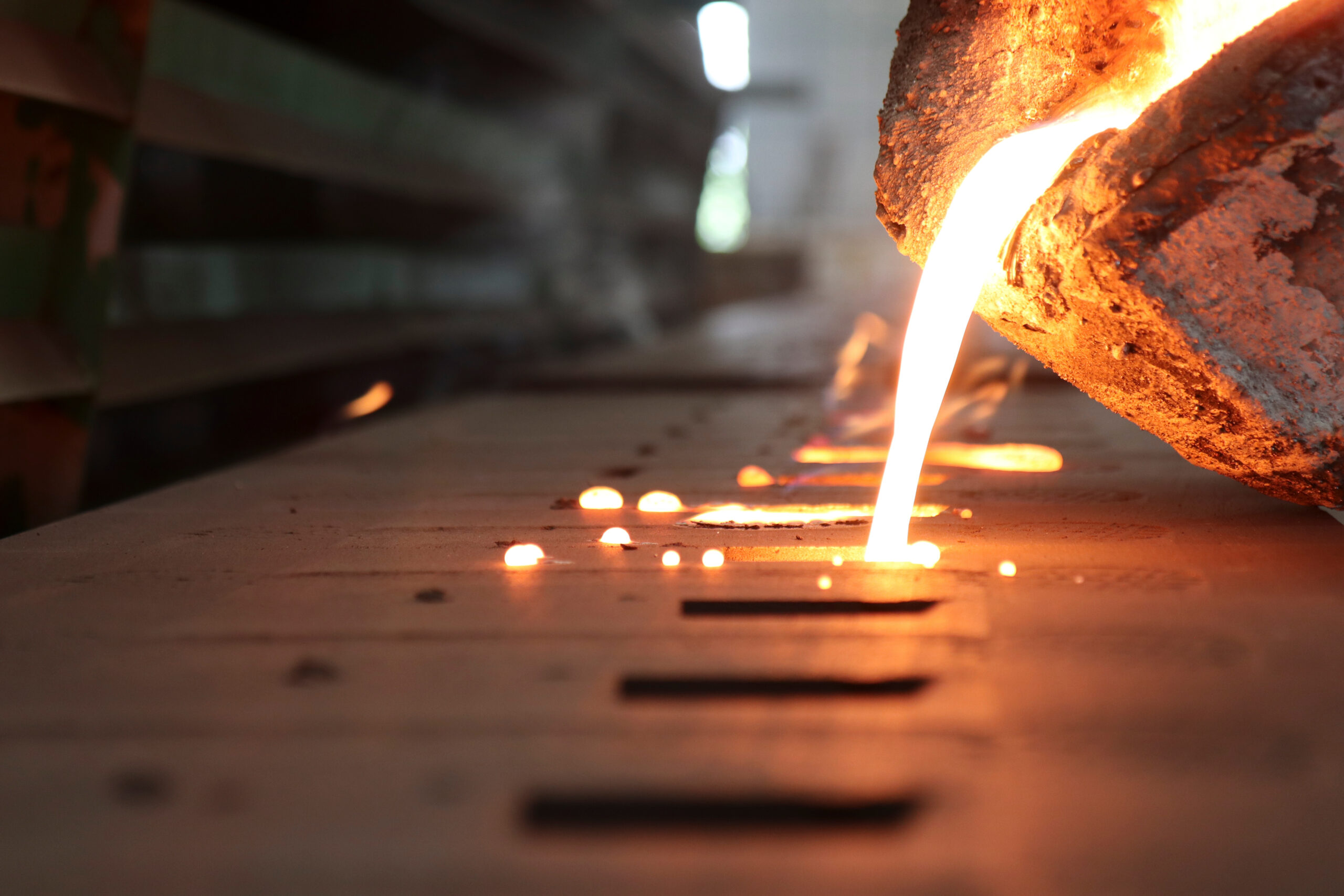
Static pouring means the mold is still while molten Babbitt flows in by gravity. The metal cools from the outer surfaces toward the center. It is simple, but gravity cannot push out impurities or gas. As the metal shrinks, voids can form. The result is a higher chance of hidden defects and a weaker bond to the backing shell.
- Metal enters and slows down, which can trap gas and slag inside.
- Solidification is not uniform, which can leave soft areas and shrinkage cavities.
- The Babbitt may not bond evenly to the shell, which reduces load capacity.
- Inclusions and oxides can end up below the running surface where they cause early wear.
Centrifugal Casting in One Look
Centrifugal casting rotates the mold at speed while molten Babbitt is poured. The spinning action generates force that drives the cleanest, densest metal out to the mold wall where the bearing surface forms. Heavier inclusions and gas move inward and away from the running surface. Cooling is fast and even along the wall, which locks in a strong bond to the shell and a uniform microstructure.
- Rotation pushes metal against the mold wall for a tight, even bond.
- Gas and slag are forced toward the bore and can be machined away.
- Grain structure is refined and dense, which boosts fatigue strength.
- Wall thickness stays consistent, which helps alignment and balance.
Why Static Pouring Is Risky
Trapped Gas and Porosity
During static pouring, the molten metal slows down as it meets cooler surfaces. Gas bubbles and vapor do not have a way to escape. As the metal freezes, these bubbles get locked into the bearing wall as porosity. Porosity reduces the effective contact area, lowers strength, and makes the surface more likely to crack under cyclical loads. Even a few percent of voids can shorten bearing life in high-speed or heavy-load service.
Segregation and Oxide Skins
Static pours tend to create areas where elements in the Babbitt alloy separate as the metal cools. That leads to spots that are softer or harder than the rest. In addition, oxides form on the surface of the melt and can fold into the bearing during a slow gravity feed. These thin oxide films act like tiny delaminations inside the metal. Under vibration, the films can grow into cracks and spall.
Weak Bond at the Backing
For Babbitt bearings, the bond to the steel or bronze shell is everything. If the bond is weak or incomplete, the overlay can slip and fail. Static pouring increases the chance of an uneven bond line because metal flow is not forced across the shell surface. That can leave cold shuts, poor wetting, and a patchy interface. Once the bond lets go at one point, load shifts, temperatures spike, and the failure spreads.
Uneven Wall Thickness and Misalignment
A still mold relies only on careful gating and perfect timing. Any tilt or change in cooling can lead to thicker or thinner sections. Uneven walls throw off balance and squeeze lubricant films unevenly. The machine runs hotter and louder, and the bearing wears out fast. Precision machines, turbines, and pumps suffer the most from this issue.
Why Centrifugal Casting Lasts Longer
Clean Metal at the Bearing Surface
In a spinning mold, centrifugal force pushes solid particles and clean, dense liquid metal outward. Gas and lighter slag move inward and do not get locked under the working surface. After machining the bore, those impurities are removed. The result is a clean load zone that can carry high pressure without early fatigue.
Strong, Consistent Bond Strength
Centrifugal casting creates intimate contact between the molten Babbitt and the backing shell. The pressure from rotation improves wetting, which lowers the chance of bond failure. Fusion Babbitting qualifies this bond with adherence checks, ultrasonic testing when required, and dimensional inspection to verify uniformity across the entire surface.
Uniform Microstructure and Thickness
The spinning action promotes even cooling and a fine grain structure. A tighter, more uniform microstructure resists crack growth and fretting. At the same time, rotation holds wall thickness consistent around the circumference, which improves alignment and keeps oil films stable. Machines run smoother, bearings run cooler, and service life increases.
A Visual Guide You Can Picture
Even without images, you can imagine how these two methods behave during a pour. Use this mental model to see where defects hide and why centrifugal casting services deliver longer lasting bearings.
Imagine Static Pouring
- Metal flows in and slows down as it meets a still mold.
- Gas bubbles rise slowly and some get trapped under the cooling skin.
- Oxides on the surface fold into the flow and ride toward the wall.
- Cooling starts at the wall and moves inward, closing around bubbles and slag.
- As the metal shrinks, isolated pockets open up as voids.
- At the bond line, the lack of pressure leaves a patchy contact area.
- Grain size varies with local cooling, which creates soft and hard spots.
- Uneven thickness appears where flow is slow or the mold is not perfectly level.
Imagine Centrifugal Casting
- The mold is spinning before the pour starts.
- Molten metal enters and is flung to the wall by force.
- Fresh metal scrubs the shell surface for solid wetting and bonding.
- Heavier, cleaner metal stays at the wall where the load will be carried.
- Gas and lighter slag migrate inward toward the bore.
- Cooling at the wall is fast and uniform, which refines the grain.
- Wall thickness stays even because the metal finds the same radius everywhere.
- Final machining removes the inner layer where impurities collected.
Inside Fusion Babbitting Centrifugal Casting Services
Fusion Babbitting uses certified tin and lead based Babbitt materials to match OEM specifications or upgraded performance needs. We cast and machine to tight tolerances, paying close attention to bore size, wall thickness, and geometry for stable oil films and proper alignment. Our technicians have decades of hands-on experience with motors, pumps, turbines, hydro units, and more.
Materials and Precision
Each job begins with a review of operating load, speed, temperature, and lubrication. We select the Babbitt alloy based on those factors and the original design. Our equipment maintains controlled melt temperatures and pour timing so you get consistent properties. After casting, we machine to the required dimensions and finish the running surface to the target roughness for quick break-in and long life.
Process Controls and Testing
Quality control is built into every step. Fusion Babbitting verifies shell preparation, bond surface cleanliness, melt temperature, and spin speed. We check wall thickness and runout after casting. We also perform visual and dimensional inspections, dye penetrant checks on critical zones, and ultrasonic tests when needed. The results are recorded so you have a documented trail of compliance to your standards.
Capacity and Rapid Turnaround
Our general fabrication and machining capability covers components up to 120 inches in diameter and length. We support emergency requests 24 hours a day for clients across the country. Whether you need one-off repair or a production run for an OEM, our team can scale while holding precision.
How Our Process Works From Start to Finish
- Consultation and teardown. We inspect the bearing and review the failure mode to prevent a repeat.
- Reverse engineering if needed. We build drawings and models when originals are missing or obsolete.
- Shell prep. We clean, grit blast, and tin the backing to ensure strong bonding.
- Material selection. We match or upgrade the Babbitt alloy for your duty cycle.
- Centrifugal casting. We spin the mold and pour under controlled conditions.
- Rough machining. We remove the bore layer and bring the part close to size.
- Arc Flame Spray when required. We restore worn areas on journals or housings and machine back to spec.
- Finish machining. We hold precise diameters, alignment, and surface finish.
- Inspection and testing. We verify bond, dimensions, and surface quality.
- Packing and shipment. We protect the surface and ship nationwide on your schedule.
Applications and Industries We Serve
Key Applications
- Electric motors
- Hydro power systems and pump storage
- Pumps and compressors
- Turbines in fossil and nuclear plants
Industries
- Aluminum mills
- Cement and chemical plants
- Fossil and nuclear power plants
- Hydro and pump storage facilities
- Marine repair and shipyards
- Mines and steel mills
- Motor repair shops
- Paper mills
- Crushed stone producers
Static Pouring vs. Centrifugal Casting Summary
- Defect control. Static pouring traps gas and slag. Centrifugal casting forces impurities inward so they can be machined away.
- Bond strength. Static pours can leave weak areas at the shell. Spun pours improve wetting and bond integrity.
- Wall uniformity. Static methods risk uneven thickness. Spun molds produce consistent sections and balance.
- Microstructure. Static cooling can vary across the part. Spun cooling refines grain size for higher fatigue resistance.
- Total cost. Static pours may look cheaper but lead to early failures. Centrifugal casting services reduce rework and increase uptime.
Frequently Asked Questions
Is centrifugal casting worth the cost for my bearings?
Yes in most heavy-duty cases. The initial price may be slightly higher than a simple static pour, but you save through fewer failures, less downtime, and longer service intervals. Many clients see total lifecycle costs drop because the bearings hold alignment, stay cooler, and resist fatigue.
Can Fusion Babbitting reverse engineer an obsolete bearing?
Yes. Our reverse engineering team documents dimensions, clearances, and oil features, then creates detailed drawings. If you need upgrades, such as different oil grooves or thrust faces, we can include those during the build.
What sizes can you handle?
We machine and fabricate up to 120 inches in diameter and length. Contact us about your project and we will confirm fit, fixtures, and timeline.
What if my part has heavy wear or out-of-round damage?
We often use Arc Flame Spray to restore worn areas or journals. After spraying, we machine to the original specs or your updated requirements, then proceed with rebabbitting if needed.
How fast can you turn around an emergency?
Fusion Babbitting offers 24-hour emergency service. We triage the project, plan the process, and work around the clock when uptime is at risk. Nationwide logistics support helps keep lead times tight.
Why Choose Fusion Babbitting
- Established since 1988 with over 40 years of combined expertise focused on bearings.
- Proven centrifugal casting services with certified Babbitt alloys and strict process control.
- Full-service shop for repair, rebabbitting, rebuilding, reverse engineering, and new manufacturing.
- Arc Flame Spray restoration and precision machining to OEM or better targets.
- Large capacity for heavy industry and responsive 24-hour emergency support.
- Documented quality checks for bond strength, thickness, alignment, and surface finish.
Real-World Wins When You Switch to Centrifugal
Clients who move from static pouring to spun casting see fewer early bearing removals, better oil film stability, and cooler running temperatures. Pumps hold pressure more consistently, motors vibrate less, and turbines run with tighter clearances. Most important, the bearing surface and the bond line resist fatigue for much longer. This is the heart of why centrifugal casting services improve reliability across industries from paper to power generation.
Maintenance Tips That Protect Your Investment
- Maintain clean oil. Contamination turns minor defects into failures. Good filtration pays for itself.
- Watch alignment. Misalignment adds edge loading, heat, and rapid wear even on a perfect casting.
- Record temperatures and vibration. Small changes warn you before damage grows.
- Inspect during planned outages. Early signs like wipe patterns or discoloration are signals to act.
- Partner with a proven rebabbitting source. Consistency in casting and machining extends service life.
About Fusion Babbitting
Fusion Babbitting Co., Inc. is located at 4540 W. Burnham St., Milwaukee, WI 53219. We serve clients nationwide with a complete lineup of bearing solutions. Our shop repairs, rebabbitts, rebuilds, reverse engineers, and manufactures new Babbitt bearings for demanding applications. We combine advanced equipment and skilled specialists to deliver precise, durable parts that keep your machinery online.
Contact Fusion Babbitting
Address: 4540 W. Burnham St., Milwaukee, WI 53219
Phone: 414.645.5800
Toll-Free: 800.613.5118
Email: sales@fusionbabbitting.com
Ready to Extend Bearing Life With Centrifugal Casting Services
If you want fewer defects, stronger bonds, and longer life, choose a process built for reliability. Fusion Babbitting can help you upgrade from static pouring to a clean, consistent spin cast bearing that stands up to real-world loads. Request a quote or speak with our team today to see how our centrifugal casting services, machining, and repair capabilities can solve your toughest bearing challenges. We are ready 24 hours a day to support your schedule and keep your operation moving.